
Blog
What to Look for in a Commercial Cleaning Contract

Choosing a commercial cleaning company is not just a housekeeping decision — it is a business decision that affects your brand image, staff wellbeing, health and safety compliance, and even how clients or tenants perceive your organisation. Yet many businesses in Nairobi sign cleaning agreements based on price alone, without checking what the contract actually covers. A vague agreement often leads to missed cleaning sessions, inconsistent quality, disputes over pricing, and frustration on both sides.
A well-structured commercial cleaning contract protects everyone involved. It gives the client clarity on what to expect, and it gives the cleaning company a clear scope to deliver against. Whether you manage an office in Upper Hill, a retail space in Kilimani, a school in Karen, or a warehouse along Mombasa Road, understanding what belongs in a commercial cleaning contract will help you choose a provider that is reliable, professional, and genuinely accountable.
This guide walks through everything a decision-maker should look for before signing a contract with a commercial cleaning company in Nairobi or elsewhere in Kenya, and what questions to ask along the way.
What Is a Commercial Cleaning Contract?
A commercial cleaning contract is a written agreement between a business or institution and a cleaning service provider that sets out exactly what cleaning work will be done, how often it will happen, what standards apply, how much it will cost, and how issues will be resolved if the service falls short. Unlike a casual verbal arrangement, a proper contract gives both parties a reference point to measure performance against and a basis for resolving disagreements.
In short, a solid commercial cleaning contract should include: a defined scope of work, a cleaning schedule, pricing and payment terms, quality standards, staffing and supervision details, health and safety provisions, insurance and liability terms, and a clear process for handling complaints or missed cleaning.

Why a Detailed Commercial Cleaning Contract Matters
Some business owners assume that a simple quotation or a short email confirmation is enough. In practice, a detailed contract matters because it:
- Removes ambiguity about what is and is not included in the service.
- Protects your business if cleaning staff cause damage or fail to meet agreed standards.
- Sets clear expectations for cleaning frequency, working hours, and access to your premises.
- Provides a documented basis for resolving billing disputes or service complaints.
- Confirms that the provider carries appropriate insurance and follows proper health and safety practices.
For institutions such as hospitals, schools, and hotels — where hygiene standards are especially important — a clear contract is not optional. It is part of responsible facility management.

Key Elements Every Commercial Cleaning Contract Should Cover
1. Clearly Defined Cleaning Services
The contract should spell out precisely which areas and tasks are covered — for example, washrooms, workstations, reception areas, boardrooms, kitchens, staircases, parking areas, and windows. It should also state which services are excluded, such as specialised carpet shampooing, high-level glass cleaning, or post-construction cleaning, so there is no confusion later about what falls under routine office cleaning services versus a chargeable extra.
2. Cleaning Frequency and Schedule
Cleaning needs vary by business type. A busy corporate office in Westlands may require daily cleaning, while a smaller retail outlet might only need cleaning three times a week. The contract should specify:
- Days and times cleaning will take place (before or after business hours, or during the day for high-traffic areas).
- Frequency for each task — daily, weekly, monthly, or quarterly.
- Provisions for one-off or emergency cleaning requests.
3. Scope of Work and Cleaning Standards
Beyond a task list, the contract should describe the standard of cleanliness expected — for instance, surfaces disinfected, floors free of visible dust or stains, washrooms restocked with supplies, and bins emptied and lined. Defining standards, not just tasks, gives you a measurable benchmark for judging performance.
4. Pricing, Invoicing and Payment Terms
Transparent pricing prevents disputes down the line. Look for a contract that clearly states the monthly or per-visit rate, what is included in that rate, how additional or one-off services will be charged, invoicing frequency, accepted payment methods, and the notice period required for any price adjustment.
5. Quality Control and Performance Monitoring
A professional facilities management company in Kenya should have a system for checking that cleaning standards are actually being met — such as supervisor site visits, cleaning checklists signed off after each visit, or a simple feedback mechanism for reporting concerns. This is one of the clearest signs of a provider that takes accountability seriously, rather than one that disappears after signing the contract.
6. Staff Training and Professionalism
Ask whether cleaning staff are trained, supervised, and briefed on the specific needs of your premises — for example, handling sensitive documents in an office, or following stricter hygiene protocols in a clinic or hotel kitchen. The contract should confirm that staff assigned to your site are vetted and properly equipped to represent your business professionally, especially since cleaners often have access to your premises outside normal working hours.
7. Health, Safety and Hygiene Standards
Commercial cleaning involves chemicals, equipment, and work at height in some cases (such as window cleaning). The contract should confirm that the provider follows appropriate health and safety practices, uses correctly labelled and safely stored cleaning products, and takes precautions to avoid accidents on your premises.
8. Cleaning Equipment and Supplies
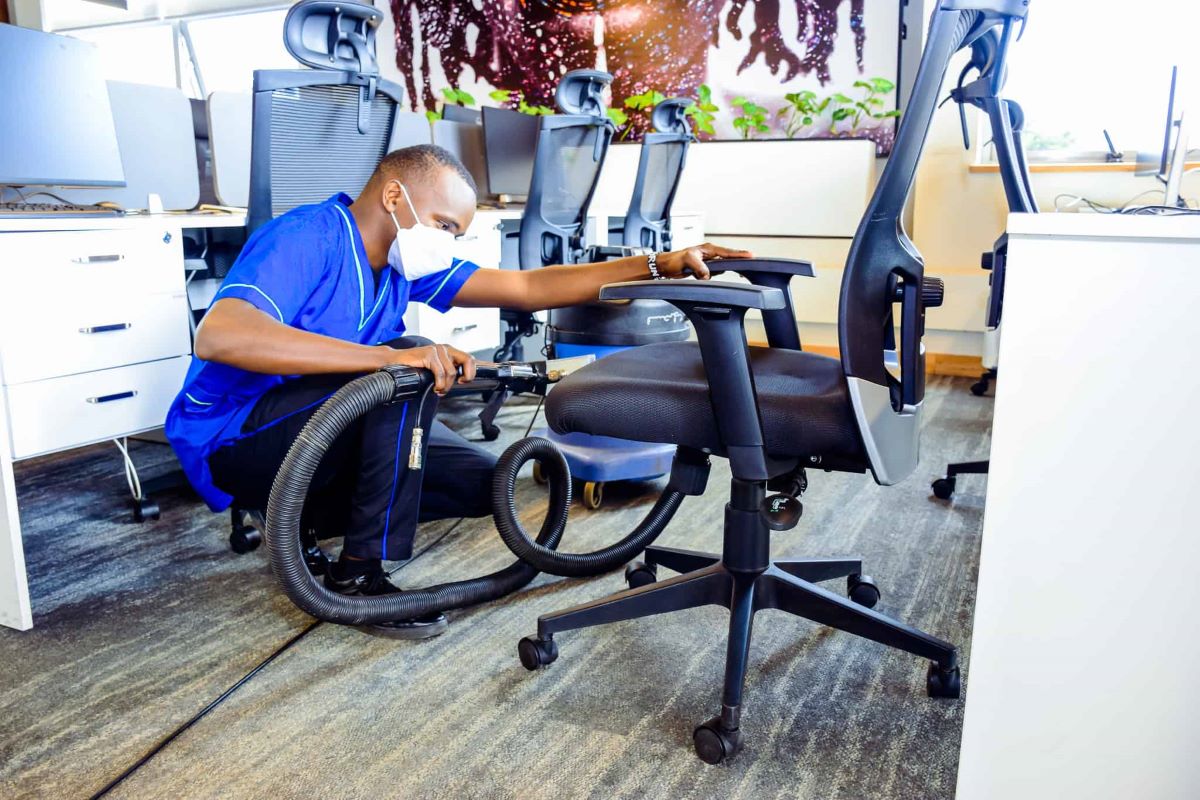
Clarify whether the cleaning company supplies its own equipment, tools, and consumables (such as detergents, mop systems, vacuum cleaners, and washroom supplies like tissue and hand soap), or whether these are provided by the client. This affects both pricing and the quality of results, since professional-grade equipment generally cleans more effectively and safely than basic domestic tools.
9. Insurance and Liability
A reputable commercial cleaning company should be able to confirm what happens if property is damaged or an accident occurs on-site during cleaning. The contract should state how liability is handled, giving your business protection in case something goes wrong.
10. Handling Complaints and Missed Services
Even reliable providers occasionally face staff absences or logistical issues. What matters is how the contract addresses this. Look for a clear complaints process, a defined response time for resolving issues, and a policy for make-up cleaning sessions if a scheduled visit is missed.
11. Contract Duration, Renewal and Termination
Check the length of the contract term, renewal conditions, and — importantly — the notice period required to terminate the agreement if the service does not meet expectations. A confident, professional cleaning company will not need to lock clients into rigid, hard-to-exit contracts.
12. Confidentiality and Security
Cleaning staff often work in offices after hours, with access to documents, computers, and secure areas. The contract should address confidentiality expectations and any site security procedures staff are required to follow, particularly for corporate offices, financial institutions, and organisations handling sensitive client information.
13. Flexibility and Customised Cleaning Services
Every business is different — a hotel in Gigiri has different needs from a warehouse in Embakasi or a retail unit in Lavington. A good contract should allow for a customised cleaning plan rather than a rigid, one-size-fits-all package, with room to adjust scope or frequency as your business needs change.
14. Environmental and Sustainable Cleaning Practices
More Kenyan businesses are paying attention to the environmental impact of the products used on their premises. If sustainability matters to your organisation, ask whether the provider can offer environmentally considerate cleaning products and waste-reduction practices as part of the service.
How to Choose the Right Commercial Cleaning Company in Nairobi or Kenya
With so many cleaning companies in Kenya competing on price alone, it helps to evaluate providers against a consistent set of criteria rather than the lowest quote. When comparing commercial cleaning companies in Nairobi, consider:
- Whether they offer a written contract with clearly defined scope, schedule, and pricing.
- Whether they can accommodate the specific needs of your industry — office, retail, hospitality, healthcare, or institutional.
- How they handle quality checks, supervision, and communication with clients.
- Whether their staff are trained and properly equipped.
- How responsive they are to inquiries and how clearly they explain their service before you sign anything.
Organisations across Nairobi’s commercial hubs — including Westlands, Kilimani, Karen, Lavington, Parklands, Upper Hill, the CBD, Runda, Gigiri, Industrial Area, Embakasi, and along Mombasa Road — rely on professional cleaning partners to maintain hygiene standards without having to manage cleaning staff directly. This is where working with an established facilities management company in Nairobi makes a practical difference.
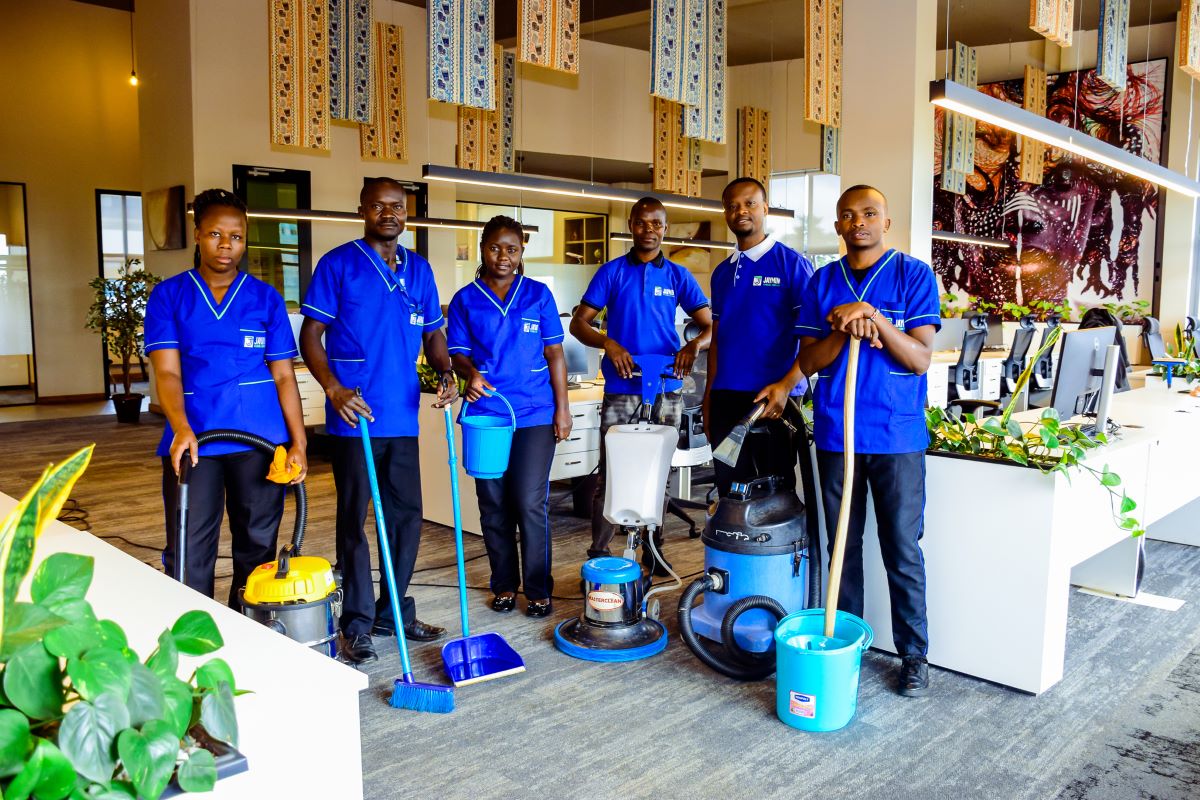
This is the kind of structured, accountable approach that Jaymin Facilities Management brings to organisations across Nairobi and the wider Kenyan market. Rather than offering generic cleaning, Jaymin Facilities Management works with clients to build a customised cleaning schedule suited to their premises, whether that is a corporate office, a retail space, a hospitality venue, or an institutional facility. Trained cleaning personnel, consistent service delivery, and responsive customer support are central to how the company approaches every client relationship, supported by a broader range of facilities management services including waste management, pest control, and general repair and maintenance for organisations that prefer a single, dependable partner rather than juggling multiple contractors.
Businesses exploring commercial cleaning services in Nairobi can review Jaymin Facilities Management’s corporate cleaning services and wider facilities management services to understand how a customised plan could be structured for their premises.

Questions to Ask Before Signing a Commercial Cleaning Contract
- What exactly is included in the quoted price, and what would count as an extra charge?
- How many staff will be assigned to our site, and are they trained and supervised?
- What happens if a scheduled cleaning session is missed?
- Do you supply your own cleaning equipment and supplies, or should we provide them?
- How do you handle complaints, and what is your typical response time?
- What is the notice period to end the contract if we are not satisfied?
- Can the cleaning schedule be adjusted as our needs change?
A provider that answers these questions clearly and confidently — without vague or evasive responses — is generally a stronger sign of professionalism than a low price alone.
Frequently Asked Questions
What should be included in a commercial cleaning contract?
A commercial cleaning contract should include a clearly defined scope of work, the cleaning schedule and frequency, pricing and payment terms, quality standards, staffing and supervision details, equipment and supplies arrangements, insurance and liability terms, and a documented process for handling complaints or missed cleaning.
How much do commercial cleaning services cost in Nairobi?
Costs vary depending on the size of the premises, the frequency of cleaning, the specific services required, and the industry involved (for example, hospitality and healthcare facilities often need more intensive cleaning than a standard office). Rather than comparing quotes in isolation, it is more useful to compare what is included in each quote — scope, frequency, staffing, and supplies — before deciding based on price.
How often should an office be professionally cleaned?
Most corporate offices benefit from daily cleaning of high-traffic areas such as washrooms, reception, and kitchens, with additional deep-cleaning tasks scheduled weekly or monthly. Smaller offices with less foot traffic may manage with a few cleaning sessions per week. The right frequency depends on staff numbers, visitor traffic, and the nature of the business.
How do I choose a commercial cleaning company in Kenya?
Look beyond price. Evaluate whether the company offers a clear written contract, trained and supervised staff, a defined quality-control process, and the flexibility to customise the cleaning plan to your premises. Ask direct questions about their process before signing, and take note of how clearly and confidently they respond.
What is the difference between commercial and office cleaning?
Office cleaning typically refers to routine cleaning of workspaces such as desks, meeting rooms, and washrooms. Commercial cleaning is a broader term that covers office cleaning as well as cleaning for retail spaces, hospitality venues, institutions, warehouses, and other business premises, often with services tailored to the specific demands of each sector.
Should a commercial cleaning company provide its own equipment?
In most professional arrangements, yes — the cleaning company supplies its own equipment and consumables as part of the service, using professional-grade tools and products. This should be clearly stated in the contract, along with who is responsible for restocking washroom supplies such as soap and tissue.
How long should a commercial cleaning contract last?
Contract terms vary, but many commercial cleaning agreements run on a rolling monthly or annual basis with a defined notice period for termination — often 30 days. A reasonable notice period gives you flexibility to end the arrangement if the service does not meet expectations, without being locked into an inflexible long-term commitment.
What should I do if a cleaning company does not meet the agreed standards?
Refer to the complaints process outlined in your contract. Document the specific issue, raise it with the provider promptly, and request a resolution timeline, such as a make-up cleaning session. If the contract includes a performance-monitoring or quality-check clause, use it to hold the provider accountable. Persistent failures despite raised concerns are a valid reason to review the contract’s termination terms.
Conclusion
A commercial cleaning contract is more than paperwork — it is the foundation of a working relationship that protects your business, your staff, and your visitors. Businesses that take the time to review scope of work, cleaning standards, pricing, staffing, insurance, and complaint procedures before signing are far less likely to face disputes or disappointing service down the line.
If your organisation in Nairobi or elsewhere in Kenya is reviewing its current cleaning arrangement or looking for a dependable partner for the first time, Jaymin Facilities Management offers professional, reliable, and customised commercial cleaning services designed around the specific needs of your premises — backed by trained personnel and responsive customer service.
Get in Touch with Jaymin Facilities Management
Ready to work with a cleaning partner you can rely on? Contact Jaymin Facilities Management today to discuss a customised commercial cleaning plan for your office, retail space, institution, or commercial property in Nairobi or across Kenya.
Call us: 0704 524 846 | 0752 478 139
Office Location: Westlands Commercial Centre
Email: info@jayminfacilitiesmanagement.co.ke
Website: https://jayminfacilitiesmanagement.co.ke/