

Blog
What Does a Facilities Management Company Actually Do?

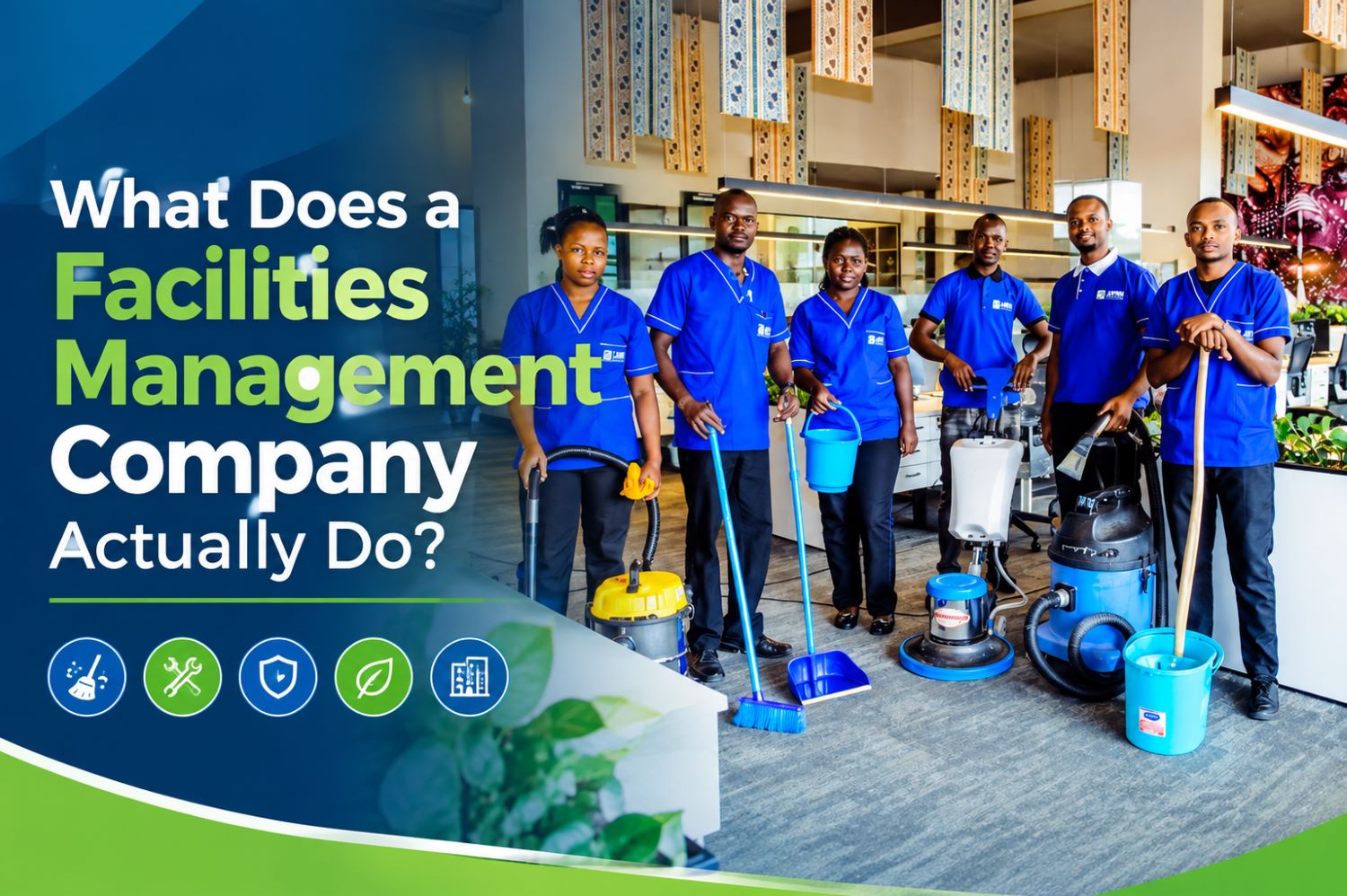
Ask most people what a facilities management company does, and the answer usually stops at “they clean the building” or “they fix things when they break.” It’s an understandable assumption, but it misses most of what the job actually involves.
A professional facilities management company in Kenya is responsible for far more than mopping floors or unblocking a sink. It coordinates the people, schedules, contractors, supplies and physical systems that keep a commercial property, office, hotel or institution safe, clean, functional and presentable, day after day, without the property owner having to manage every moving part themselves.
This article breaks down what facilities management actually involves, how it differs from property management and general cleaning, what services are typically included, and how to think about outsourcing this function if you manage a building, office, school, hospital, retail space or institution in Nairobi or elsewhere in Kenya.
What Is Facilities Management?
| Quick answer: Facilities management is the coordinated oversight of the services, maintenance and support functions that keep a building or facility safe, clean and operational — including cleaning, repairs, waste handling, hygiene, grounds care and hospitality support, usually delivered under one point of contact rather than through separate, unconnected suppliers. |
In practical terms, facilities management means putting one team or provider in charge of the everyday services a property needs to keep running smoothly. Instead of a business owner or office manager separately hiring a cleaner, chasing an electrician, calling a waste collection truck and negotiating with a gardener, a facilities management company brings these functions together and manages them as a single, coordinated service.
For a decision-maker, the practical definition is simple: facilities management is what stands between a building simply existing and a building actually working well for the people who use it every day.
What Does a Facilities Management Company Do?
A facilities management company takes on the day-to-day operational upkeep of a property so that the organisation occupying it can focus on its core business rather than facility logistics. That typically includes planning cleaning schedules, arranging routine and emergency maintenance, managing waste collection, overseeing hygiene standards in washrooms, coordinating contractors, and monitoring the overall condition of the premises.
Rather than reacting only when something breaks, a properly run facilities management service is built around prevention: inspecting equipment before it fails, servicing systems on a schedule, and flagging small issues before they become expensive ones. This is what separates a facilities management company from an ad-hoc arrangement where a business calls a different handyman every time something goes wrong.
A facilities management company also acts as a single accountable point of contact. If a washroom runs out of supplies, a light fitting fails, or a compound needs urgent attention before a client visit, the facility manager or business owner has one number to call, not five.
Key Services Provided by Facilities Management Companies
The specific mix of services varies by provider and by client, but professional facilities management in Kenya typically covers some combination of the following areas.
Cleaning Services
Corporate and commercial cleaning covers daily and periodic cleaning of offices, common areas, washrooms and executive spaces. This is often the most visible part of facilities management, and the standard of cleaning is usually the first thing visitors and employees notice about how well a facility is run.
General Building Maintenance
This includes plumbing, electrical work, carpentry and general repairs, split between preventive maintenance (planned inspections and servicing designed to catch problems early) and corrective maintenance (fixing issues once they occur, ideally before they escalate).
Waste Management
Responsible collection, handling and disposal of general commercial waste, along with proper handling of electronic waste, is a core facilities management function, particularly for offices, retail premises and institutions generating waste on a daily basis.
Sanitary Bin Services and Washroom Hygiene
Scheduled sanitary bin servicing and washroom hygiene support matter for any building with public-facing or shared facilities, including offices, hotels, schools and hospitals. Poorly maintained washrooms are one of the fastest ways a facility loses credibility with visitors, staff and clients.
Pest Control, Fumigation and Fogging
Pest identification, treatment and ongoing preventive pest management protect both the physical building and the health and safety of everyone using it, and are particularly important for hospitality venues, food-handling premises and healthcare facilities.
Hospitality and Support Services
Some facilities management providers also offer outsourced hospitality and support functions such as reception cover, catering support, beverage service and messengerial services for offices, institutions, hotels and events — useful for organisations that want consistent front-of-house standards without managing that staffing directly.
Landscaping and Grounds Maintenance
Lawn care, hedge trimming, garden upkeep and general grounds maintenance keep the exterior of a commercial compound presentable, which matters for first impressions as much as interior cleanliness does.
Projects Outsourcing
For larger or occasional needs, some facilities management companies also coordinate and supervise facility improvement, renovation or maintenance projects from planning through to handover, acting as a single point of accountability for the project rather than leaving the client to manage multiple contractors directly.
Facility Inspections, Health and Safety Support
Regular walk-throughs and inspections help identify hazards, wear and compliance gaps before they become safety incidents or regulatory problems, supporting an organisation’s broader health and safety obligations.
Facilities Management vs Property Management vs Cleaning Companies
| Quick answer: Property management focuses on the business and legal side of a property — leases, tenants, rent collection and ownership matters. Facilities management focuses on the physical operation of the building itself — cleaning, maintenance, hygiene and day-to-day upkeep. A cleaning company typically covers cleaning alone, while a facilities management company coordinates cleaning alongside maintenance, waste, hygiene, grounds care and other support services under one provider. |
This distinction matters because the three are often confused, especially by organisations hiring a service provider for the first time.
A property manager typically deals with tenancy agreements, rent, occupancy and the commercial relationship between a landlord and tenants. A facilities manager deals with what happens inside and around the building on a daily basis — whether the lights work, the floors are clean, the bins are emptied and the gardens are tended. A cleaning company, meanwhile, usually specialises narrowly in cleaning, and may not offer maintenance, waste management, pest control or grounds care at all.
An organisation that hires a facilities management company is generally looking for one provider to manage several of these functions together, rather than negotiating separately with a cleaning contractor, an electrician, a waste collector and a gardener.
Hard Facilities Management vs Soft Facilities Management
| Quick answer: Hard facilities management covers the physical building systems — electrical, plumbing, mechanical and structural maintenance. Soft facilities management covers the people-facing services that affect comfort and hygiene — cleaning, waste management, reception support, catering and grounds care. A well-run facility needs both working together. |
Hard facilities management refers to the physical infrastructure of a building: electrical systems, plumbing, structural elements, mechanical equipment and other fixed assets that need regular servicing to keep functioning safely and reliably.
Soft facilities management refers to the services that shape how people experience a space day to day: cleaning, hygiene, waste management, reception and hospitality support, and grounds care.
Neither area works well in isolation. A building can be spotlessly clean and still be unsafe if its electrical systems are neglected. Equally, a building with sound infrastructure can still feel unwelcoming and unhygienic if cleaning and washroom hygiene are inconsistent. Professional facilities management treats hard and soft services as two halves of the same responsibility, coordinated together rather than managed separately.
Why Do Businesses Need Facilities Management?
| Quick answer: Businesses need facilities management to keep their premises safe, clean and functional without diverting management time and attention away from their core operations. Poorly managed facilities lead to avoidable breakdowns, hygiene complaints, unsafe conditions and a poor impression on staff, clients and visitors. |
Facility problems rarely stay small for long. A dripping tap left unaddressed becomes a water-damaged ceiling. A washroom that runs out of supplies during business hours becomes a hygiene complaint from staff or visitors. Waste left uncollected attracts pests. A pest problem that isn’t caught early can spread through an entire building, and in a hospitality, healthcare or food-handling environment, it can become a serious operational and reputational risk.
Professional facilities management exists to catch these issues before they escalate, through:
- Maintaining a genuinely safe workplace, not just a compliant one on paper
- Keeping facilities clean, hygienic and functional on a consistent basis
- Preventing avoidable breakdowns through scheduled, preventive maintenance
- Improving the experience of employees, clients and visitors
- Supporting overall workplace productivity by reducing disruption
- Protecting the value of physical assets and building infrastructure
- Coordinating multiple service providers under a single point of accountability
- Responding quickly when maintenance issues do arise
- Delivering consistent service quality instead of variable, ad-hoc results
Should You Outsource Facilities Management?
| Quick answer: Outsourcing facilities management means engaging a specialist provider to handle cleaning, maintenance, hygiene, waste and related services, instead of managing each function internally with separate staff and suppliers. It can reduce administrative burden and improve coordination, though whether it also reduces cost depends on the scope of services and how the contract is structured. |
Many organisations reach a point where managing cleaning staff, maintenance contractors, waste collection and hygiene services separately becomes a distraction from their actual business. Outsourcing facilities management to a single provider is one way to address that.
Potential advantages of outsourcing include:
- Access to a provider whose core focus is facilities management, not a side activity
- One point of contact instead of several unrelated contractors
- Reduced internal administrative burden around scheduling and supervision
- Better coordination between related services, such as cleaning and waste collection
- More predictable, scheduled service delivery rather than reactive fixes
- Access to trained personnel without the internal cost of recruiting and managing them directly
- Easier monitoring of service performance through a single relationship
- More management time freed up to focus on core business activities
It’s worth being clear-eyed about cost: outsourcing does not automatically mean cheaper. Whether it saves money depends on an organisation’s specific requirements, how the service contract is structured, and the scope of services included. For some organisations, the main benefit is not cost at all, but reliability, coordination and reduced administrative load — which can be just as valuable.
Facilities Management in Nairobi and Kenya
Nairobi’s commercial landscape is varied, and the facilities management needs of a business often depend heavily on where it operates and what kind of premises it runs.
Office towers and corporate premises in areas such as Westlands, Upper Hill and Nairobi CBD tend to prioritise daily cleaning, washroom hygiene, and responsive general maintenance, given the volume of staff and visitors passing through each day. Mixed-use and residential-adjacent commercial developments in Kilimani, Lavington and Parklands often need a combination of cleaning, grounds maintenance and pest control, particularly where outdoor and communal spaces are part of the property.
Diplomatic and residential-commercial areas such as Gigiri, Runda and Karen frequently require a stronger emphasis on grounds and landscaping alongside cleaning and maintenance, given the scale of compounds and gardens typical in these areas. Meanwhile, industrial and logistics-heavy zones such as Industrial Area, Mombasa Road and Embakasi tend to place more weight on waste management, general repair and maintenance, and pest control, given the nature of operations in these areas.
Hotels and hospitality venues across Nairobi, wherever they are located, typically need an integrated combination of cleaning, hospitality support, pest control and washroom hygiene, since guest experience depends on all of these functioning consistently and without visible gaps.
Across all of these environments, the common thread is the same: organisations need a facilities management company in Nairobi that understands the specific demands of their type of premises, rather than a generic one-size-fits-all service.
How to Choose a Facilities Management Company in Kenya
Choosing the right facilities management provider is a decision that affects daily operations, so it’s worth evaluating candidates carefully rather than defaulting to the lowest quote. Consider the following factors:
- Experience and relevant expertise across the services you actually need
- Breadth of services offered, and whether they can be combined under one contract
- How staff are trained, supervised and held accountable for quality
- Reliability and responsiveness, particularly for urgent or emergency issues
- Health and safety practices built into how services are delivered
- Quality control measures, such as supervisory visits and service checks
- Clarity and consistency of communication
- Whether service reporting is provided, and how regularly
- Whether preventive maintenance is part of the offering, not just reactive repairs
- Ability to customise services to your property’s schedule and operating hours
- Clear contract terms and transparent pricing
- Quality of customer service and ease of reaching the provider
- References, reviews and general reputation in the market
- Ability to manage multiple facility services under one provider, reducing the number of separate contracts you need to track
Why Choose Jaymin Facilities Management
Jaymin Facilities Management is a facilities management company based in Westlands, Nairobi, working with businesses and property owners across Kenya. Facilities management is Jaymin’s core focus rather than a side activity, which means clients get a dedicated point of contact for scheduling, service adjustments and day-to-day requests, rather than being one of many unrelated jobs on a contractor’s list.
Jaymin brings together several of the functions covered in this article under one coordinated service, including corporate and commercial cleaning, general repair and maintenance, garbage and waste management, sanitary bin services and washroom hygiene solutions, pest control, fumigation and fogging, landscaping and grounds maintenance, outsourced hospitality support, and projects outsourcing for larger facility improvement or renovation work.
Because service delivery is structured around flexibility, services can be arranged individually or combined, and schedules can be adapted to a property’s operating hours, footfall and specific requirements. For organisations in Nairobi and across Kenya looking for a professional facilities management company that can coordinate cleaning, maintenance, hygiene, waste management and grounds care under a single, reliable point of contact, Jaymin Facilities Management is a company worth considering for that role.
Frequently Asked Questions
What does a facilities management company actually do?
A facilities management company coordinates the day-to-day services that keep a building or facility clean, safe and functional, including cleaning, maintenance, waste management, hygiene services and grounds care, typically delivered under one point of contact rather than through separate, unconnected suppliers.
What services are included in facilities management?
Facilities management commonly includes corporate cleaning, general building maintenance (plumbing, electrical and carpentry), waste management, sanitary bin and washroom hygiene services, pest control, landscaping and grounds maintenance, hospitality and support services, and coordination of larger facility improvement projects.
What is the difference between facility management and property management?
Property management deals with the business and legal side of a property, such as leases, tenants and rent. Facility management deals with the physical day-to-day operation of the building itself, including cleaning, maintenance, hygiene and general upkeep.
Why should a company hire a facilities management company?
Hiring a facilities management company gives an organisation a single, accountable provider for services that would otherwise require managing several separate contractors, which reduces administrative burden, improves coordination, and helps prevent small maintenance or hygiene issues from becoming larger, costlier problems.
What is the difference between hard and soft facilities management?
Hard facilities management covers physical building systems such as electrical, plumbing and structural maintenance. Soft facilities management covers people-facing services such as cleaning, hygiene, waste management, hospitality support and grounds care. Both are needed for a facility to function well.
How much do facilities management services cost in Kenya?
Costs vary depending on the size of the property, the specific mix of services required, how frequently they’re needed, and how the contract is structured. Because requirements differ significantly between an office, a hotel, a school or an industrial site, it’s best to request a tailored quote based on your specific facility.
How do I choose the best facilities management company in Nairobi?
Look at the provider’s experience, the breadth of services they offer, how their staff are trained and supervised, their responsiveness to urgent issues, the clarity of their contract terms and pricing, and whether they offer preventive maintenance rather than purely reactive repairs.
Can one company manage cleaning, maintenance and waste management together?
Yes. This is one of the main reasons organisations choose facilities management companies over hiring separate contractors — a single provider can coordinate cleaning, maintenance, waste management and related services under one contract and one point of contact.
Talk to Jaymin Facilities Management
If your organisation is weighing up whether to bring in a professional facilities management company in Nairobi or Kenya, the starting point doesn’t need to be complicated. Get in touch with Jaymin Facilities Management to discuss your facility’s specific requirements, and the team can help put together a service arrangement suited to your property, whether that covers cleaning alone or a fully integrated facilities management solution.
Call us: 0704 524 846 | 0752 478 139
Office Location: Westlands Commercial Centre
Email us: info@jayminfacilitiesmanagement.co.ke
Website: https://jayminfacilitiesmanagement.co.ke/